

In the ever-accelerating world of technology, Google has once again created history by Google Quantum Algorithm. The tech giant recently announced that it has developed a landmark quantum computing algorithm one that could change the way machines process information, solve problems, and even redefine the boundaries of artificial intelligence (AI).
This isn’t just another upgrade in computing power, it’s a paradigm shift. For decades, computers have relied on binary logic (0s and 1s). But quantum computing goes even further, it uses quantum bits, or qubits, which can exist in multiple states at once. This allows quantum computers to perform complex calculations faster than even the most powerful supercomputers. Now Google Quantum Algorithm the company has opened the door to a new era of computing intelligence.
Google Quantum Algorithm: From Theory to Reality
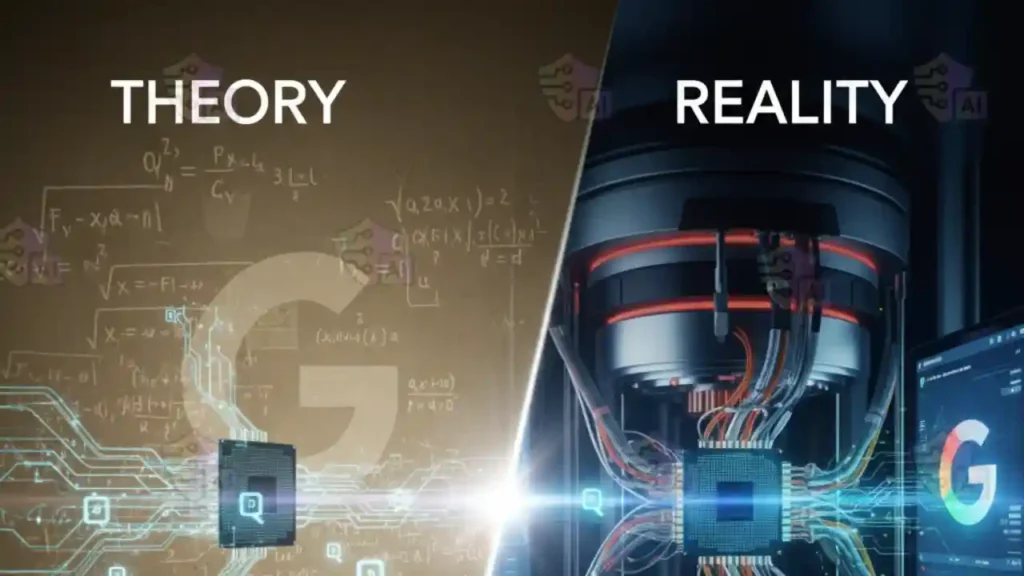
Before diving into Google’s innovation, permit’s unpack what makes quantum computing so modern. Unlike classical computer systems, which handle one operation at a time, quantum structures use superposition and entanglement two concepts from quantum physics to procedure a couple of outcomes concurrently. Think of it as a laptop which can discover limitless solutions right away, as opposed to one-by using-one. This ability makes quantum computing ideal for:
- Optimizing massive data sets
- Enhancing AI model training speeds
- Cryptography and cybersecurity applications
- Drug discovery and molecular simulations
- Predictive modeling and finance simulations
While researchers and agencies have experimented with quantum hardware for years, the real assignment has been constructing strong, efficient algorithms that could clearly leverage quantum abilities. That’s exactly what Google Quantum Algorithm objectives to solve.
Inside Google’s Landmark Quantum Algorithm

According to internal research reports and professional remark, Google Quantum Algorithm is designed to carry out calculations that are impossible for classical computers to achieve successfully. This set of rules enables quantum processors to control errors correction, pattern discovery, and optimization issues with extra precision.
In easier terms it could take information that would take conventional computers thousands and thousands of years to research and decrease it to seconds of computation time. Google’s group describes this milestone as a “quantum advantage by google quantum algorithm” not just a theoretical idea, however a realistic demonstration of superior overall performance over classical systems. With this improvement, Google isn’t simply competing within the AI race; it’s redefining the bounds of what AI systems can attain.
Why It’s a Turning Point for Artificial Intelligence?

The fusion of AI and quantum computing could be the most transformative technological partnership of our lifetime. Traditional AI systems, including large language models (LLMs) such as Gemini or ChatGPT, rely on enormous data processing and pattern recognition tasks. These tasks demand huge computational resources often limited by classical hardware. Quantum computing changes that equation.
how Google quantum algorithm could revolutionize AI:
- Faster Training for AI Models: Quantum computing can train complex AI systems in days instead of months.
- Smarter Optimization: AI models can identify better solutions to complex problems from logistics to energy management.
- Enhanced Security: Quantum-resistant encryption can protect sensitive AI-powered systems.
- Real-Time Learning: AI can process multi-dimensional data streams in real time, improving decision-making and adaptability.
From Quantum Supremacy to Quantum Utility

This isn’t Google’s first jump into the quantum frontier. Back in 2019, the corporation claimed “quantum supremacy” whilst its 53-qubit processor, Sycamore, completed a computation in two hundred seconds that would have taken the world’s most effective supercomputer over 10,000 years.
However, the Google Quantum Algorithm represents a shift from supremacy to software. It’s not just about outperforming traditional computers in remoted duties, it’s about making quantum computing actually beneficial for real-global programs like AI, logistics, and scientific studies. Experts accept as true with this marks the beginning of quantum practicality, where quantum systems ought to integrate into mainstream technologies and reshape industries from finance to healthcare.
Looking Ahead: The Future of Quantum-Powered AI(Google Quantum Algorithm)

Google Quantum Algorithm is greater than only a milestone — it’s a sign of wherein computing is headed next. In the coming years, we may see hybrid systems that blend classical and quantum computing to supply unprecedented speed and perception. Google’s Quantum AI Lab maintains to expand, making an investment closely in scalable qubit architectures and go-domain AI applications.
As quantum hardware turns into more solid and on hand, we’ll likely see a surge in quantum cloud offerings, permitting businesses to tap into Google Quantum Algorithm electricity without proudly owning the hardware. For AI researchers, this indicates a destiny in which schooling next-era models will be quicker, inexpensive, and extra wise than ever.