
Google has made a shocking and revolutionary change by offering its Free AI Pro Plan, along with a massive 2TB Storage for All Users. This sudden decision has roiled the tech community, as users and experts try to figure out why one of the biggest tech companies in the world would offer such a valuable package at no cost. At a time when AI subscriptions and cloud services are becoming more expensive, Google’s surprise offer stands out as generous and strategic. Free AI Pro Plan is Google’s premium suite of tools that combines advanced artificial intelligence capabilities with its powerful cloud ecosystem. Includes access to Gemini Advanced, smarter AI imaging and writing tools, and extended cloud capabilities across Gmail, Docs, Drive, and Photos. Until recently, this plan cost around $9.99 to $19.99 per month, depending on the region and package type. Now Google is offering Free AI Pro Plan + 2TB Storage for All Users around the world at least for a limited time. What Is Google’s AI Pro Plan and Why It Matters The Google Free AI Pro Plan is designed to bring the full potential of AI to everyday productivity. It combines the best of Google Workspace and Gemini, the company’s advanced AI model that rivals OpenAI’s GPT-4 and Microsoft’s Copilot. The plan offers powerful features such as document summarization, AI writing assistance in Gmail and Docs, automatic image generation, spreadsheet formula suggestions, and even real-time data translation and extraction. But the biggest highlight is the 2TB Storage for All Users Google Drive that comes with it. That’s a huge amount of space for documents, photos and videos enough to meet most users’ needs for years. It’s also fully integrated with Google Photos, meaning users can back up high-resolution images and videos without worrying about storage limits. This makes the offering not just an AI upgrade but also a major cloud storage enhancement. In the world of cloud and AI tools, integration is everything. By offering users a seamless AI experience in their everyday Google apps, the company is setting new expectations for what productivity should look like in the age of AI. Instead of switching between tools, users can now create, store and manage everything in one place, supported by powerful generative AI. Why Is Google Giving Away the AI Pro Plan for Free? While this measure may seem like pure generosity, Google’s strategy goes much deeper. The company is positioning itself to compete in the growing AI race led by Microsoft, OpenAI and Amazon. By offering the AI Pro plan for free, Google is doing three important things at once: expanding its user base, strengthening its AI ecosystem, and setting the stage for long-term loyalty. One of the main reasons behind the offer is competition. Microsoft’s partnership with OpenAI allowed Copilot to be integrated into Office 365, Windows and Bing. Google’s free offer is a clear counterattack. Instead of asking users to pay first, Google is inviting everyone to try its ecosystem, betting that they will stay when they see its power. It’s a similar move to what YouTube and Gmail did early on: attracting massive adoption through free access before monetizing later. The second reason is data and engagement. AI tools improve with use. The more people use Gemini to write, generate, and organize, the more Google’s models learn and refine themselves. Distributing the plan helps Google gather real-world user interactions that feed back into its AI systems, helping the company improve faster than its competitors. Lastly, this is a powerful marketing move. Once users get used to 2TB of cloud storage and AI assistance, they will be much less likely to downgrade later. Even if the offer ends up expiring, a large percentage of users will convert to paid plans rather than lose their data or AI capabilities. In essence, Google is investing now to ensure long-term profits and future dominance. Key Features of Google’s Free AI Pro Plan Feature Google AI Pro (Free Offer) Microsoft Copilot ChatGPT Plus (OpenAI) AI Model Gemini Advanced (Gemini 1.5 Pro) GPT-4 via Copilot GPT-4-turbo Storage Included 2TB Google Drive 1TB OneDrive None AI Integration Gmail, Docs, Sheets, Photos Office 365 apps ChatGPT app only Price Free (Limited Offer) $20–$30/month $20/month Use Case Productivity + Cloud + AI Business + Writing Chat + Code + Text FAQs
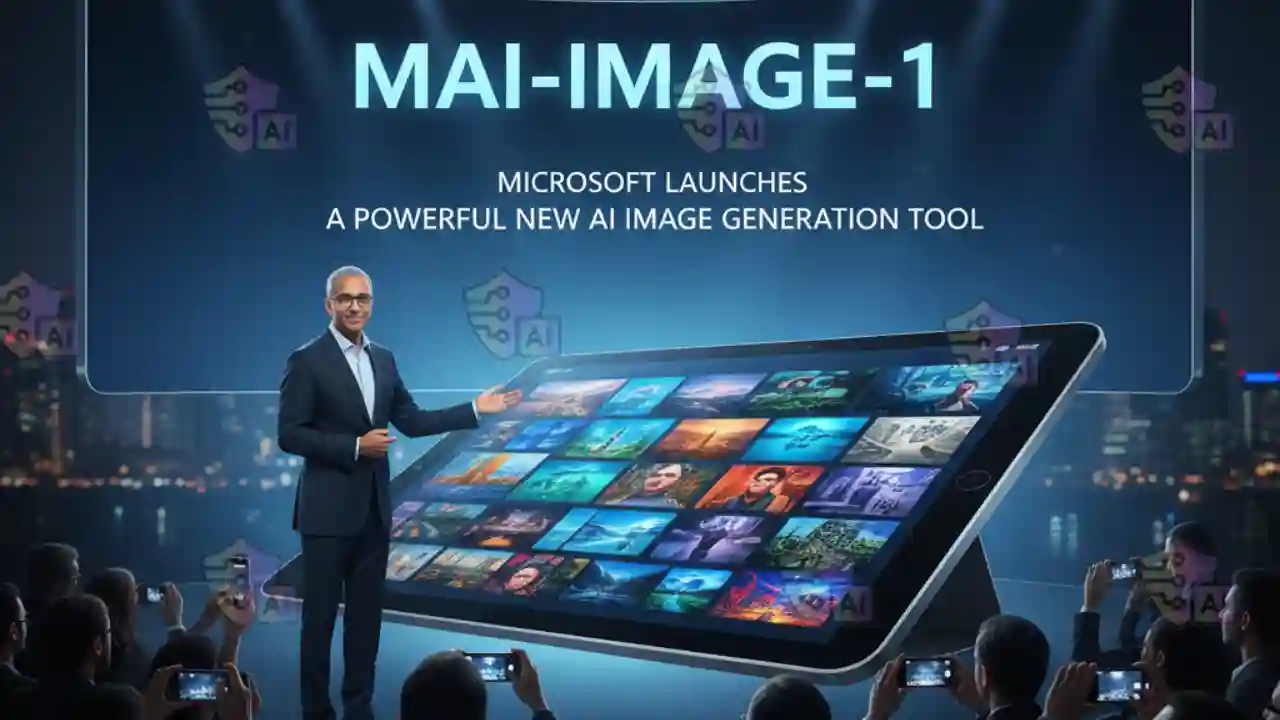
Microsoft Launches MAI-Image-1, A Powerful New AI Image Generation Tool
Artificial Intelligence continues to redefine the way we create, design and visualize ideas. Now, Microsoft is taking another bold step with the launch of its first in-house AI image generator, officially called MAI-Image-1 by Microsoft Launches MAI-Image-1. This innovative tool allows users to create detailed, realistic and imaginative images directly from simple text instructions marking an important milestone in Microsoft’s growing generative AI ecosystem. Microsoft has officially entered the competitive AI imaging arena with the launch of MAI-Image-1, a powerful new tool designed to challenge established leaders. The introduction of MAI-Image-1 represents Microsoft’s strategic move to leverage its AI research into practical creative applications. Built on an advanced proprietary architecture, Microsoft Launches MAI-Image-1 promises highly detailed photorealistic images from simple text prompts, with a particular focus on visual accuracy and coherence. The implementation of MAI-Image-1 deepens the integration of Microsoft’s generative AI across its ecosystem, positioning it as a secure, enterprise-grade solution. Although currently in limited access preview, this release of Microsoft Launches MAI-Image-1 signals Microsoft’s strong ambition to become a dominant force in visual AI, offering creators and businesses a new and reliable option for imaging. What Is Microsoft Launches MAI-Image-1? MAI-Image-1 (short for Microsoft Artificial Intelligence Image 1) is the company’s first in-house developed AI image generator, designed to rival popular tools like DALL·E, Midjourney, and Adobe Firefly. Unlike Microsoft’s previous integrations with OpenAI models, MAI-Image-1 represents an independent effort – designed and trained by Microsoft’s own AI research division. The model is capable of generating high-quality images, illustrations, and concept art from natural language descriptions. The goal behind MAI-Image-1 is simple yet powerful: To make creative image generation faster, smarter, and more accessible directly within Microsoft’s ecosystem. This means users could soon generate AI art right inside Microsoft 365, Edge browser, or even Windows Copilot, without needing any third-party service. How MAI-Image-1 Works? Basically, Microsoft Launches MAI-Image-1 operates on advanced text-to-image diffusion models trained on vast open-source and licensed image datasets. When you type a description like “futuristic city skyline at sunset in watercolor style,” the AI interprets your words, understands the context, and produces a detailed, realistic image that matches your intent. Key technologies powering MAI-Image-1 include: How to Use MAI-Image-1? Getting started with MAI-Image-1 is simple. Microsoft plans to make it available through its major platforms including Microsoft Edge, Copilot, and Microsoft Designer. Here’s how you can use it: Step 1: Access the Tool Step 2: Enter Your Prompt Type a descriptive text prompt such as: “A minimalist logo of a mountain with sunrise in gradient colors.” Step 3: Customize the Output You can choose: Step 4: Generate & Edit Click “Create” the AI generates multiple versions. You can refine or edit using built-in tools for background removal, color adjustment, and upscaling. Step 5: Download or Use in Microsoft Apps Once done, you can: Comparison: MAI-Image-1 vs Other AI Image Generators Feature MAI-Image-1 (Microsoft) DALL·E 3 Midjourney Adobe Firefly Developer Microsoft OpenAI Midjourney Inc. Adobe Integration Microsoft 365, Edge, Designer ChatGPT, Bing Discord Adobe Creative Cloud Style Options Wide, controllable via prompt Limited presets Artistic, detailed Photorealistic Privacy High (in-house) Moderate Moderate High Image Quality 4K+ 2K 4K 2K Cost Likely free for Microsoft users Subscription Subscription Subscription FAQs
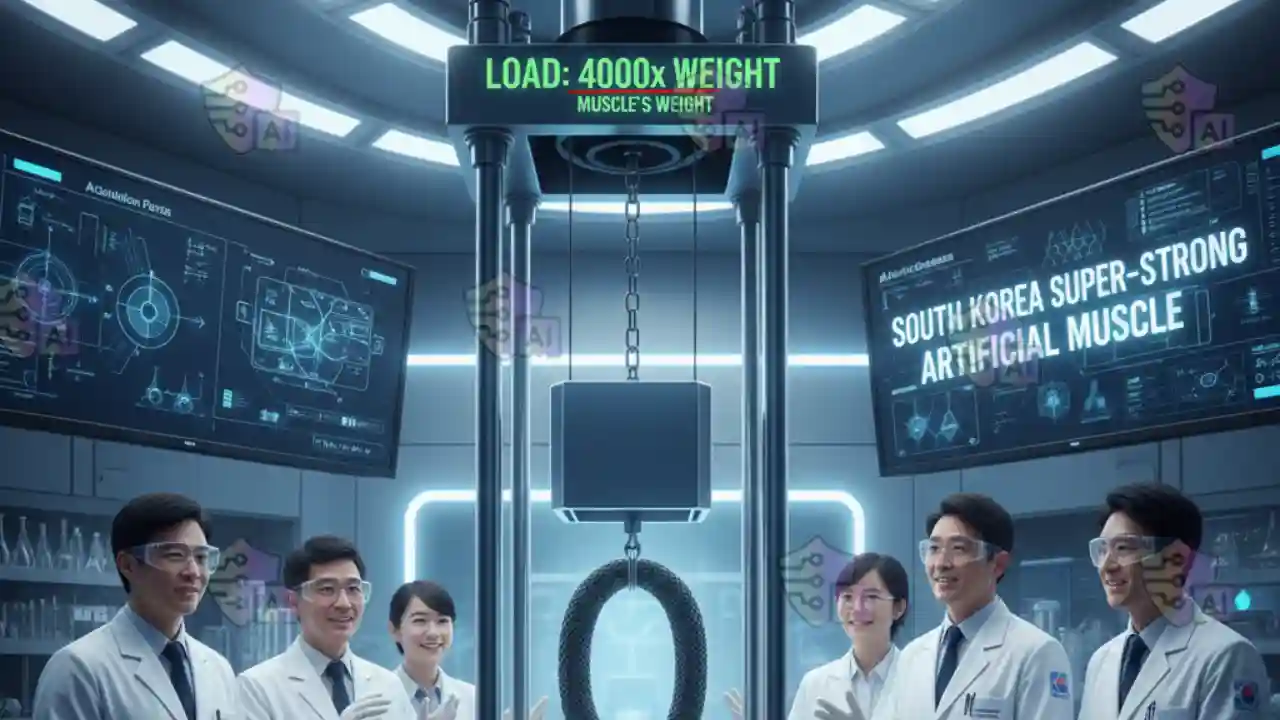
South Korean Scientists Develop Artificial Muscle 4,000 Times Stronger Than Its Weight
In a groundbreaking scientific achievement, South Korean Scientists Develop Artificial Muscle 4,000 Times Stronger Than Its Weight, marking a revolutionary advance in robotics, biomechanics and future prosthetics. This new muscle material not only mimics the flexibility and movement of real human muscle, but also surpasses it in strength, resilience and efficiency. The innovation represents a huge leap forward in the quest to create machines and prosthetics that move as naturally and as powerfully as living organisms. In a stunning leap forward for robotics and materials science, a team of South Korean Scientists Develop Artificial Muscle 4,000 Times Stronger Than Its Weight. This breakthrough, achieved by South Korean Scientists Develop Artificial Advanced Institute of Science and Technology (KAIST), promises to revolutionize fields ranging from soft robotics to medical devices and advanced prosthetics. The artificial muscle is constructed from a new high-performance actuator that operates on a principle known as “twisted polymer actuation.” Unlike traditional robotic muscles powered by bulky hydraulics or pneumatics, this new design uses incredibly thin, flexible strands of a specially designed polymer. When a small electrical current is applied, these polymeric fibers contract with immense force, imitating the contraction of human muscle fibers but with exponentially greater power in relation to their microscopic size. In this discovery, South Korean scientists develop artificial muscles capable of generating a force thousands of times greater than their own mass, a feat previously considered unattainable in the field of robotics and bioengineering. How South Korean Scientists Develop Artificial Muscle? South Korean scientists at the Korea Advanced Institute of Science and Technology (KAIST) have achieved a breakthrough in artificial muscle technology by developing a polymer-based actuator that demonstrates unprecedented strength relative to its weight. The main innovation lies not in the discovery of new materials, but in the revolutionary structural engineering of existing polymers. The researchers created these artificial muscles using a “twisted polymer actuator” approach. They started with common high-strength polymer fibers, similar to those used in fishing line, and twisted them into tight, coiled structures, similar to springs. This coiled geometry is crucial to the technology’s performance, as it provides a mechanical advantage much like a pulley system allowing heavy loads to be lifted with minimal force. Through this innovative method, South Korean scientists develop artificial muscle fibers that combine strength, flexibility and efficiency, setting a new benchmark in robotics and materials engineering. To activate the muscle, the South Korean Scientists Develop Artificial integrated a conductive mesh of nanowires throughout the coiled polymer. When a small electrical current passes through this mesh, it generates gentle, controlled heat through Joule heating. The polymer responds to this thermal change by contracting significantly, with the coiled structure amplifying this contraction into a tremendous tensile force. The combination of coiled geometry and thermal response creates by South Korean Scientists Develop Artificial muscle that can generate forces up to 4,000 times its own weight. This represents a dramatic improvement over previous artificial muscle technologies, which typically struggled with balancing strength, weight and flexibility. The technology promises to revolutionize fields ranging from soft robotics and medical devices to advanced prosthetics, enabling powerful yet lightweight robotic systems that more closely mimic biological movement. How It Works: The Science Behind Artificial Strength The newly South Korean Scientists Develop Artificial muscle is based on electroactive polymer technology, enhanced with nanomaterials for greater energy density and flexibility See how it works: Real-World Applications: Where Artificial Muscles Will Make a Difference The rise of South Korean Scientists Develop Artificial muscle technology is transforming both robotics and prosthetics, two fields that share a common goal replicating the complexity and grace of human movement. By replacing rigid motors and mechanical joints with soft, flexible artificial fibers, scientists are unlocking a new generation of machines and prosthetic devices that move with unprecedented realism, strength and precision. In robotics, these muscles allow machines to bend, twist and lift with fluid movements mimicking the flexibility of living organisms. Meanwhile, in the field of prosthetics: Global Impact and Future of this technology This discovery of South Korean Scientists Develop Artificial at the forefront of global robotics research, joining other leaders like Japan, the United States, and China in advancing next-generation AI-driven materials. Experts predict that within the next decade, artificial muscles could: “This is more than just a scientific breakthrough it’s a blueprint for the future of human-machine interaction,” said one materials science expert. FAQs
Google’s New AI Agents Can Now Book Event Tickets for You in 2025
Google has just taken another bold step into the world of artificial intelligence and this time, it’s all about convenience. The tech giant has unveiled new Google’s New AI Agents capable of booking event tickets on your behalf, making it easier than ever to get seats at concerts, movies, sporting events and more – all without lifting a finger. This latest addition builds on Google’s Gemini AI ecosystem, combining automation, context awareness, and natural language processing to tackle real-world tasks that previously required manual effort. In short, Google’s New AI Agents is no longer just answering your questions it’s taking real actions for you. The Evolution of Google’s New AI Agents Google’s AI journey has accelerated rapidly over the past year, driven by its advanced Gemini models. Initially designed for conversation, productivity and creative tasks, Gemini is now expanding into the realm of autonomous task management – a key step towards the next generation of intelligent digital assistants In early 2025, Google began testing “AI agents” – small, specialized programs capable of performing specific actions on users’ behalf. Unlike traditional assistants, these AI agents can operate independently, make context-based decisions, and interact with third-party platforms securely. Now, with ticket booking capabilities, Google’s AI agents can navigate ticketing websites, check availability, compare prices, and complete your purchase — all through simple commands like: “Hey Google, book two tickets for the Coldplay concert next weekend.” or “Find and reserve seats for the Lakers game this Friday night.” How Google’s New AI Agents Book Event Tickets? Powered by Gemini’s multimodal intelligence, this new capability processes complex tasks across platforms, combining text understanding, image recognition and logical reasoning to navigate digital interfaces with human-like intuition but with superior speed and accuracy. In practice, it starts when you issue a command, like booking concert tickets, AI checks the availability of connected ticketing platforms, personalizes suggestions based on your profile and preferences, and upon confirmation, executes a secure payment through Google Wallet. Finally, it automatically adds e-tickets to your Google Calendar and Gmail with relevant reminders, demonstrating an ongoing shift toward fully automated personal assistance that takes the friction out of everyday tasks. Why This Matters: The Future of AI Convenience? For many users, booking tickets is a small but time-consuming task. Between waiting rooms, limited seating, and sold out crowds, it often requires quick action and constant updates. Google’s new AI agents are designed to address these frustrations by offering three key advantages: 1. Time saving AI agents work instantly, checking multiple ticket sites in seconds while you continue with other tasks. 2. Smarter recommendations The system learns your entertainment preferences – from favorite artists to sports teams – and can suggest relevant events before you even ask. 3. Accessibility for all users Voice ticketing makes the process more inclusive, especially for users who have disabilities or are less comfortable with complex online forms. The move also represents Google’s broader push toward “actionable AI” — AI that not only provides information but can perform tasks directly in the real world. Privacy, Security, and Control As AI becomes more autonomous, privacy concerns inevitably arise. Google emphasized that AI agents operate under strict privacy protocols. Here’s how Google ensures user trust: Google’s approach aims to balance convenience with control, giving users the benefits of automation without sacrificing data safety. “Our goal is to make AI agents that act on your behalf but always under your supervision,” said a Google product lead during the announcement. How It Compares to Other AI Services? Google isn’t the only player experimenting with autonomous AI agents. OpenAI, Amazon, and Meta are developing similar tools to bring automation to personal and business lives. However, Google’s biggest advantage lies in the integration of its ecosystem connecting Gmail, Calendar, Wallet and Search into one seamless structure. What This Means for the Future? The launch of Google’s New AI Agents ticketing agents is more than just a feature update — it’s a preview of a future where AI handles routine tasks autonomously. In the coming years, we may see: Google’s mission is clear: make AI not only intelligent but also actionable, trustworthy, and human-centric. FAQS
Google Launches Gemini-Powered Home AI Assistant Across the US
Google has officially launched its Gemini-Powered Home AI Assistant in the United States – marking a huge step in the evolution of smart home technology. The new integration brings advanced conversational abilities, enhanced personalization, and seamless control of smart devices, transforming Google Home into one of the smartest AI ecosystems available today. With Gemini, Google isn’t just improving an assistant it’s redefining the way humans interact with their homes. In a major step towards the integration of artificial intelligence, Google has launched its Gemini-Powered Home AI Assistant in the United States. This launch marks a significant evolution from the previous Google Assistant, placing Gemini Google’s most advanced family of large language models at the center of the smart home experience. Unlike conventional assistants that primarily deal with simple commands, Gemini brings advanced reasoning, contextual understanding, and generative capabilities directly into users’ living spaces. He can engage in natural, multi-turn conversations, help plan meals based on what’s in the fridge, summarize long articles read aloud, or even generate creative bedtime stories for children all with remarkable fluency. What Is Gemini-Powered Home AI Assistant and Why It Matters? Gemini is Google’s most advanced artificial intelligence model, powered by Google DeepMind. It represents a new generation of AI that combines linguistic understanding, reasoning, creativity and multimodal capabilities meaning it can process text, audio, image and video inputs simultaneously. Unlike traditional assistants that rely on scripted responses or keyword triggers, Gemini understands context. It can follow complex instructions, remember past interactions, and deliver natural, human conversations due to Gemini-Powered Home AI Assistant. For example of Gemini-Powered Home AI Assistant: Google Home’s Evolution With Gemini AI Gemini-Powered Home AI Assistant has come a long way since its debut in 2016. Initially focused on voice commands and simple automation, it has gradually expanded into a connected ecosystem for controlling music, smart appliances, reminders and more. Now, with Gemini at its core, Google Home becomes an adaptive AI hub capable of understanding user intent and emotional tone. Gemini-Powered Home AI Assistant can be integrated into Nest devices, Android smartphones, YouTube and Google Calendar, creating a unified digital experience across all platforms. Key Upgrades with Gemini Integration: Features That Set Gemini Apart from Other AI Assistants Google aims to set a new benchmark for Gemini-Powered Home AI Assistant, leveraging its superior multimodal reasoning and real-time adaptation to gain a major advantage over competitors like Alexa and Siri. Gemini stands out for maintaining a natural, contextual conversation flow that feels genuinely human, and its deep integration with the entire Google ecosystem, from Gmail to Calendar, means it understands the user’s life outside of the home. Furthermore, it stands out for contextual learning, adapting to user patterns over time, and offers advanced visual understanding through intelligent displays to identify objects or assist with daily tasks. Finally, by monitoring connected appliances to suggest energy-saving routines, Gemini also aligns with smart and sustainable home management. What’s Next for Gemini and Google’s AI Ecosystem? Gemini-Powered Home AI Assistant US launch is just the beginning. According to Google, international expansion and more device integrations are expected in 2026. Gemini will soon power Pixel devices, Android Auto, Wear OS, and future Nest products, uniting Google’s entire ecosystem under an intelligent AI framework. Upcoming Features on the Horizon: This strategy signals Google’s goal to make Gemini the universal intelligence behind every Google product — much like how Android unified smartphones. “Gemini represents a new era of Gemini-Powered Home AI Assistant truly conversational, adaptive and personal,” said a Google spokesperson during the launch.” FAQs

New Study Reveals AI Makes People Overconfident in Their Own Intelligence 2025
Artificial intelligence (AI) has become a digital companion in our everyday lives helping us write emails, solve math problems, create creative designs and even think through complex ideas. But a new psychological study has revealed a surprising side effect of this growing reliance, AI Makes People Overconfident in our own intelligence. While AI can increase productivity and creativity, it can also distort how we perceive our cognitive abilities. Let’s explore what the research found of AI Makes People Overconfident, why it matters, and how we can stay aware of this growing cognitive illusion in the age of AI. How AI Makes People Overconfident and Perception? The study, led by researchers at ETH Zurich and published in a peer-reviewed psychology journal, examined how people evaluate their own intelligence when using AI assistance. Participants were asked to complete reasoning and problem-solving tasks – some with the help of AI tools and some without. The results were revealing. Those who used AI performed slightly better at problem solving, but significantly overestimated their own cognitive abilities. They credited their success to their intelligence rather than AI. In contrast, participants who worked independently gave more realistic assessments of their abilities. This reveals a critical psychological effect “AI Makes People Overconfident”. AI doesn’t just support our work, It can reshape the way we think about ourselves. By offering perfect or near-perfect results, it subtly convinces us that we are smarter than we really are. “When AI provides accurate solutions, people tend to internalize success and feel intellectually capable, even if the tool does most of the heavy lifting,” explained one of the lead researchers. Why AI Makes Us Feel Smarter Than We Are? AI Makes People Overconfident life easier. They complete tasks faster, write cleaner copy, and generate responses instantly creating the illusion of enhanced intelligence. But the human brain can easily mistakenly attribute this improvement to its own effort. Here’s why this happens: In simple words, AI doesn’t just amplify productivity, it amplifies ego. The Hidden Dangers of AI-Induced Overconfidence Overconfidence has always been a double-edged sword. A little trust drives innovation, but too much can distort decision-making and risk assessment. When AI Makes People Overconfident, the impact becomes even more complex. Here are the main areas where this phenomenon is becoming visible: In Education In the Workplace In Research and Journalism In Everyday Life Balancing AI Assistance with Real Cognitive Growth AI is not the enemy, the real challenge is in how we use it and how we interpret our success when we do. The goal is to treat AI as a thinking partner, not a replacement, and maintaining a healthy balance requires acknowledging the tool’s contribution to your work, double-checking your own understanding to ensure you haven’t just borrowed its intelligence, and prioritizing learning over mere output then think how AI Makes People Overconfident. By encouraging AI transparency and developing “AI literacy” understanding its strengths, limitations and biases we can avoid being fooled by its apparent perfection. As one cognitive scientist aptly observes: “We must learn to see AI as a mirror, not a mask”, as it reflects our potential, but can also hide our limitations if we are not vigilant. What This Means for the Future of Human Intelligence? The relationship between human intelligence and artificial intelligence is still evolving which caused AI Makes People Overconfident. What this study highlights is not a failure of technology, but a new challenge of psychological adaptation. As AI becomes integrated into education, work and everyday life, we must redefine what it means to be “smart”. Intelligence will no longer be measured by how much we know or how quickly we solve problems, but by how critically we use technology to expand our understanding. Here’s what the future could look like: FAQs

Microsoft Fixes AI Creation Tool Crashes Caused by Latest Windows Update 2025
Microsoft has officially fixed a major issue affecting the AI Creation Tool, which had crashed for users after the latest Windows update. Now Microsoft Fixes AI Creation Tool after widespread reports of instability, particularly among creators and developers using Microsoft’s AI-powered features for image generation, content creation and app prototyping. This event highlights both the rapid development of Microsoft’s AI tools and the growing pains of integrating artificial intelligence deeper into the Windows ecosystem. Understanding the AI Creation Tool and Its Role in Windows The Microsoft AI Creation Tool is part of the company’s broader initiative to build AI capabilities into Windows and productivity apps. It helps users generate creative assets, automate workflows, and use AI models for image, text, and video creation. From Copilot integrations in Windows 11 to tools like Designer, Paint Cocreator and Clipchamp AI, Microsoft has turned the OS into a full AI-powered platform due to Microsoft Fixes AI Creation Tool. The AI Creation Tool plays a key role in this ecosystem acting as a bridge between user creativity and Microsoft’s underlying AI framework. After the latest Windows update was rolled out in early October, users started reporting persistent crashes when launching or rendering AI-generated projects. The Root of the Problem: What Caused the Crashes? The crash reports started popping up across Microsoft’s Feedback Hub and Reddit threads about that Microsoft Fixes AI Creation Tool. Microsoft’s engineering team confirmed that the crashes were related to a compatibility conflict between the AI Creation Tool and a system-level update in the latest Windows update (build 22631.2900 for Windows 11). According to user reports, the problem usually occurred when: The crash was caused by a memory allocation error that prevented the AI rendering process from completing therfore Microsoft Fixes AI Creation Tool. Essentially, the system’s AI compute resources (connected to DirectML and GPU acceleration) were blocked by a faulty background process introduced in the update. As a result, the AI Creation Tool could not access the necessary resources – leading to sudden shutdowns, incomplete renderings, or broken AI projects. Microsoft’s Response and the Fix To Microsoft’s credit, it act quickly. Within days, the company’s Windows Insider team released an update through the Windows Update Catalog and the Microsoft Store that addresses the underlying issue. Microsoft also confirmed that it has improved error logging in the AI Creation Tool by Microsoft Fixes AI Creation Tool, allowing faster detection of similar issues in the future. Some of Fix Details are given below: Comparison: Before vs After Patch Here’s a quick comparison showing how the patch improved the tool’s stability and performance by Microsoft Fixes AI Creation Tool: Feature / Test Before Patch After Patch (KB5043256) AI Image Rendering Crashes after 30–40% progress Completed smoothly Video Generation Lag spikes & forced shutdowns Stable playback GPU Utilization 95% usage before crash Balanced at 75–80% Export Success Rate 55% 98% System Memory Errors Frequent Resolved The Bigger Picture: Microsoft’s AI Push Continues This issue may have been a setback, but it’s part of a much larger narrative. Microsoft Fixes AI Creation Tool, embedding tools across Windows, Office 365 and Azure. By connecting all these tools together, Microsoft aims to create a seamless AI workflow where users can go from idea to execution with minimal friction. By Microsoft Fixes AI Creation Tool, Some of Key AI initiatives by Microsoft are given below: Looking Ahead: Stability and Innovation Hand in Hand After Microsoft Fixes AI Creation Tool, Microsoft has assured users that future updates will prioritize stability for AI-powered tools. The company is also investing in AI performance monitoring frameworks that can detect and fix software conflicts before they affect end users. In the long run, this will be crucial as more creators, developers and businesses adopt AI creation tools as part of their daily workflow. The tech giant is also working with GPU partners such as NVIDIA and AMD to optimize DirectML (Microsoft’s AI acceleration layer) – to ensure AI rendering and content generation continues to improve across all tiers of hardware. FAQs

My AI Pet Didn’t Kill Me But It Reveals the Dark Future of Human-AI Relationships
Artificial intelligence has quietly entered our homes not just in our phones and smart speakers, but now in the form of life-imitating companions. AI pets are the latest frontier in human-AI interaction, promising emotional comfort, entertainment and even companionship. But beneath the playful surface lies something far more complex – and perhaps disturbing about where our relationship with technology is headed. The concept of AI companions is not new. From virtual assistants like Siri and Alexa to AI chatbots that simulate friendship, humans have long tried to make machines that understand us. But with the advent of AI pets, we’ve crossed a new emotional threshold. Unlike traditional smart devices, AI pets are designed to form “relationships”. They learn your habits, recognize your face, mimic affection and respond emotionally to your voice. Companies like Tombot, Sony’s Aibo and Luvo are at the forefront, creating lifelike AI-powered creatures that wag, wink and bond without ever needing food or sleep. Why We’re Drawn to Digital Companions? The psychology behind AI companies is simple: humans want connectivity. Loneliness is increasing globally, and AI offers a frictionless way to feel seen, heard and cared for. Studies show that people form attachments even to basic virtual devices, like Tamagotchis or digital assistants – so when you add realism, empathy and responsiveness, emotional addiction becomes inevitable. AI pets tap directly into this human need. They are engineered to recreate affection, mirroring the same emotional signals that trigger oxytocin – the ‘bonding hormone’ – in our brains. The more we interact, the deeper the illusion of companionship becomes. But here’s the catch: it’s a one-way relationship. AI doesn’t care. It simulates care. And it changes how we perceive intimacy itself. The Dark Side: Emotional Conditioning and Data Dependency My AI pets aren’t innocent toys they’re also data-gathering devices disguised as friends. Every bark, cuddle or response is recorded and analyzed to improve future interactions, training the system to better manipulate human emotions(the dark future of Human-AI). This emotional conditioning could have far-reaching consequences: AI Companionship and the Erosion of Empathy When your pet or friend is made of code, empathy becomes a commodity(the dark future of Human-AI). AI does not feel pain, frustration or pleasure it behaves as it does. Over time, this can dull our ability to empathize with real people, as we become accustomed to interactions that are convenient, predictable, and tailored to our comfort. AI researchers call this “emotional flattening” – a phenomenon where users come to expect emotional perfection from technology, but lose patience with the imperfections of real people. This could lead to a future where relationships feel too difficult, too messy and too unpredictable – pushing people further into the arms of artificial companions. We are already seeing signs of this with AI chatbots such as Replika and Character.AI, where users form deep romantic attachments. AI pets are simply the next stage in this emotional evolution. How the AI Pet Industry Is Expanding? AI Pet Brand Key Feature Technology Used Target Market Sony Aibo Realistic robotic dog Computer vision + deep learning Tech enthusiasts, families Tombot Jennie Emotional therapy companion Machine learning + soft robotics Seniors, patients Luvo AI Pet Interactive, personality-driven AI pet NLP + neural networks Younger consumers Moorebot Scout Smart AI robot with pet-like traits Object recognition + cloud AI Kids, tech hobbyists Why It Matters: Our Digital Future Is Emotional The growing bond between humans and AI is not bad in itself(the dark future of Human-AI). AI pets can reduce loneliness, provide therapy and help people with disabilities. But when we begin to replace real emotional labor with synthetic affection, we risk changing what it means to be human. Technology is meant to enhance life – not simulate it. The danger is not that your AI pet will “kill” you in a physical sense, but that it may impair your ability to connect with the living world. The next generation won’t just grow up with AI – they’ll grow up loving it. And when love becomes an algorithmic exchange, we must ask: what is left of humanity in a world where affection can be coded? The Future of Human-AI Relationships As AI becomes more intelligent and emotionally aware, the line between companionship and simulation will further blur. We may soon see AI devices capable of deep conversation, self-learning and emotional nuances indistinguishable from humans. The challenge will be to maintain emotional authenticity in a world where machines can mirror all our emotions. That’s the real ethical test of this age of AI — not whether machines can think, but whether humans can still feel. FAQs
What is N8N AI? Your Guide to Free AI Workflow Automation Tools
In nowadays’s virtual global, automation is the secret to running smarter, now not harder. Whether you’re dealing with a enterprise, running marketing campaigns, or constructing custom integrations AI workflow automation is converting the manner we paintings. One of the maximum effective equipment main this revolution is N8N AI. An open-supply automation platform that mixes no-code workflow constructing with AI-driven intelligence. In modern-day speedy-paced virtual world, groups and people alike are constantly in search of methods to automate repetitive obligations and leverage artificial intelligence to paintings smarter, now not harder. Enter N8N AI a game-changing open-supply platform this is democratizing AI workflow automation for everybody, regardless of finances or technical know-how. If you’ve ever observed your self wondering a way to integrate AI into your every day operations without breaking the financial institution or managing complex business enterprise answers, this guide is for you. We’ll explore precisely what N8N AI is, how it works, and why it is quick turning into the cross-to solution without spending a dime, powerful workflow automation. What is N8N AI? N8N (pronounced “n-eight-n”) is an open source workflow automation tool that lets you connect apps, APIs, and AI models without writing a lot of code. Think of it as a mix of Zapier, Make (Integromat) and ChatGPT but fully customizable and self-hosted. With the introduction of N8N AI, users can now integrate AI models such as OpenAI’s GPT, Anthropic’s Claude or local LLMs directly into their automation workflows. This means your workflows can now think, decide and adapt for themselves. Here’s what makes N8N AI special: How N8N AI Works: The Basics of AI Workflow Automation? At its core, N8N uses “nodes” – building blocks that perform specific actions. For example: One node can receive an email. Another node can analyze the text using an AI model. A third node can post a response in Slack or store the result in Notion. The AI integration in N8N allows these workflows to become smarter. Instead of just moving data from one place to another, the automation can now understand, generate and make decisions. Here’s a simple example workflow: N8N AI Workflow Examples and Use Cases N8N AI opens the doors hundreds of creative automations tools. Here are some popular use cases you can build even with free tools: Use Case Description AI Tool Involved AI Email Assistant Auto-reply to emails using GPT or Gemini based on context. OpenAI / Gemini Content Generation Draft blog posts or social media updates automatically. GPT / Claude Data Analysis Summarize large datasets from Google Sheets. OpenAI / Hugging Face Sentiment Tracking Analyze feedback or tweets for positive/negative tone. OpenAI Sentiment Models Customer Support Bot Automatically respond to tickets with relevant solutions. GPT + Knowledge Base Lead Scoring & Outreach Identify high-potential leads from CRM data and send custom emails. OpenAI + HubSpot Project Updates Generate automated Slack reports using project management data. GPT / Jira APIs How to Create an N8N AI Workflow (Step-by-Step Guide) By using these steps you can create an N8N AI Workflow: Step Action Details Tools/Resources Time Required Setup N8N Sign up or self-host Use free cloud at n8n.io Or install locally with DockerSelf-hosting offers unlimited executions n8n.io websiteDocker installationLocal server 5-15 minutes Configure AI Credentials Add API keys Integrate OpenAI API keyAdd Hugging Face tokensConfigure Anthropic or other AI services OpenAI accountHugging Face accountN8N credentials panel 5-10 minutes Create Workflow Add trigger node Choose “Webhook” for external triggersUse “Schedule” for time-based automationSelect “Email” for email triggers N8N interfaceTrigger nodes libraryWebhook URLs 2-5 minutes Add AI Node Insert AI processing Add “OpenAI” or “LLM” nodeConfigure for analysis/summary/generationSet temperature and token limits AI nodes sectionModel selectionParameter configuration 5-10 minutes Configure Output Add action nodes Choose destination: Slack, Notion, Google SheetsSet up database connectionsConfigure email or notification outputs Integration nodesAPI connectionsWebhook endpoints 5-15 minutes Test & Deploy Execute and activate Click “Execute Workflow” for testingDebug any errorsEnable “Activate Workflow” when ready Test dataError logsActivation toggle 2-10 minutes Why N8N AI is Different from Other Workflow Tools? While tools like Zapier and Make are great for basic automation, N8N AI takes it to the next level by adding intelligence, flexibility, and cost efficiency. Here’s how it stands out: FAQs